
You planned this trip for months. Then you land in Los Cabos feeling exhausted. Instead of heading straight to the pool or your first dinner reservation, you're groggy, dehydrated, and nursing a headache. By the time you arrive at your hotel or villa, all you want is a nap.
It often starts before the plane even touches down. Commercial aircraft cabins typically maintain a relative humidity of just 6–10%, which is drier than most deserts. Hours of dry cabin air, limited water intake, and travel stress can leave you dehydrated before your vacation even begins.
After caring for hundreds of visitors in Los Cabos, I've found that many people blame travel fatigue when dehydration is often a major contributor.
Mobile IV therapy delivers fluids and electrolytes directly into your bloodstream, helping you rehydrate quickly so you can spend your first day enjoying Cabo, not recovering from the flight.
Key Takeaways
- Aircraft cabin humidity averages just 6-10%, far below the 20% minimum comfort threshold (PMC/NIH, 2020)
- A 4-hour flight to Cabo can cost you up to 1,440mL of fluid through breathing alone
- Dehydration and jet lag compound each other — fixing the fluid deficit first is the fastest path back to feeling good
- Travelers departing from high-altitude cities (Denver, Mexico City, Salt Lake City) often land even more depleted
- IV hydration reaches your bloodstream with 100% bioavailability, bypassing the 30-minute GI absorption delay of oral fluids
Aircraft cabin relative humidity averages 6-10%, well below the 20% minimum comfort threshold. At 12% cabin humidity, respiratory water loss increases to approximately 360mL per hour, meaning a 4-hour flight costs a traveler up to 1,440mL of fluid through breathing alone (PMC/Nutrients, 2020).
Why Drinking Water Is NOT Enough
One of the most common things I hear from guests on arrival day is, "But I drank water the whole flight." And I believe them. The problem isn't that drinking water doesn't help, it's that most travelers don't drink enough to fully offset the dehydrating effects of air travel.
A typical bottle of water served on a flight contains about 500 mL. Many passengers drink one, maybe two, over the course of the trip. Meanwhile, the low humidity inside an aircraft cabin increases water loss through breathing and the skin. Depending on the flight conditions and the individual, you can lose hundreds of milliliters of fluid over several hours simply because of the dry cabin environment. Add coffee, alcohol, or limited opportunities to drink, and it's easy to arrive already behind.
Research consistently shows that even mild dehydration, around 1–2% loss of body weight, can contribute to increased fatigue, reduced concentration, headaches, and changes in mood. Those are the same complaints many travelers experience after landing, even on relatively short flights.
So, if you arrive in Cabo feeling tired, foggy, or sluggish, it doesn't necessarily mean you failed to hydrate. More often, it's the combination of dry cabin air, limited fluid intake, travel stress, and the journey itself that leaves you starting your vacation at a deficit.
see which IV drip addresses travel fatigue
What About Travelers Flying from High-Altitude Cities?
If you're flying to Cabo from a high-altitude city like Denver, Calgary, or Mexico City, your body may face an additional hydration challenge before you even board the plane.
Living at or departing from higher elevations can increase fluid loss through breathing, and some people experience greater urine output, particularly if they aren't fully hydrated to begin with. Once you're on the aircraft, cabin humidity drops to extremely low levels, often below 20%, which can further increase water loss throughout the flight.
The combination doesn't guarantee you'll become dehydrated, but it can make the effects of travel feel more noticeable. If you've ever flown from a high-altitude city and arrived feeling unusually fatigued, thirsty, or mentally foggy, the dry cabin environment may be part of the reason.
When I treat travelers arriving in Cabo, I've found that guests flying from higher elevations often report feeling more depleted after longer flights. While every person is different, it's another reason to prioritize hydration before, during, and after your trip.
How Do Dehydration and Jet Lag Feed Each Other?
Many travelers think dehydration and jet lag are two separate problems. In reality, they overlap, making you feel worse than either one would on its own.
Jet lag is a disruption of your body's internal clock. As a rule, your circadian rhythm takes about 36 hours to adjust for each time zone crossed, with eastbound travel often taking longer than westbound. No IV drip can reset your biological clock, and it shouldn't be marketed that way. What IV therapy can address is the dehydration, fatigue, and nutrient depletion that frequently accompany air travel.
Even mild dehydration can contribute to fatigue, headaches, difficulty concentrating, and an overall feeling of sluggishness. At the same time, jet lag often disrupts sleep, leaving your body with fewer resources to recover. Together, these effects can make your first day of vacation feel far more exhausting than it needs to be.
By correcting dehydration soon after you arrive, you're removing one major contributor to how poorly you feel. Your body will still need time to adjust to the new time zone, but you'll be doing it from a stronger starting point by being more hydrated, better supported (with vitamins and nutrients), and ready to make the most of your time in Cabo.
Your vacation has already started the moment you land. Feeling your best sooner means spending less time recovering from the journey and more time enjoying why you came.
Circadian clocks require approximately 1 to 1.5 days of recovery per time zone crossed, and 68% of international business travelers regularly experience negative jet lag symptoms (CDC Yellow Book 2024). IV hydration doesn't fix circadian disruption, but resolving the concurrent dehydration deficit removes the compounding fatigue layer that makes jet lag symptoms feel far worse than they are.
learn more about what's in our hydration drips
Why Cabo's Climate Makes Travel Fatigue Even More Noticeable
You step off the plane already recovering from the journey. Then the airport doors open, and it feels like you've walked into a wall of heat.
Los Cabos sits on the edge of the Sonoran Desert, where summer temperatures regularly climb into the 90s (32°C+) and the UV index frequently reaches extreme levels. In a matter of seconds, your body goes from the cool, air-conditioned cabin to intense desert heat, where it immediately begins working harder to stay cool. Already dehydrated from your flight, that transition can make the effects of travel feel even more noticeable.
Some travelers feel fine when they land, only to crash a few hours later. The combination of dehydration, heat, sun exposure, alcohol, and activity can catch up quickly. Often on the very first afternoon, as your body hasn't had a chance to recover before asking it to perform in one of the hottest climates many visitors experience all year.
Recover well from the journey, and you don't just feel better, you give yourself the best chance to enjoy Cabo from the moment you arrive, instead of watching the first day of your vacation slip away.
read about our services and what to expect
How Does IV Hydration Actually Work?
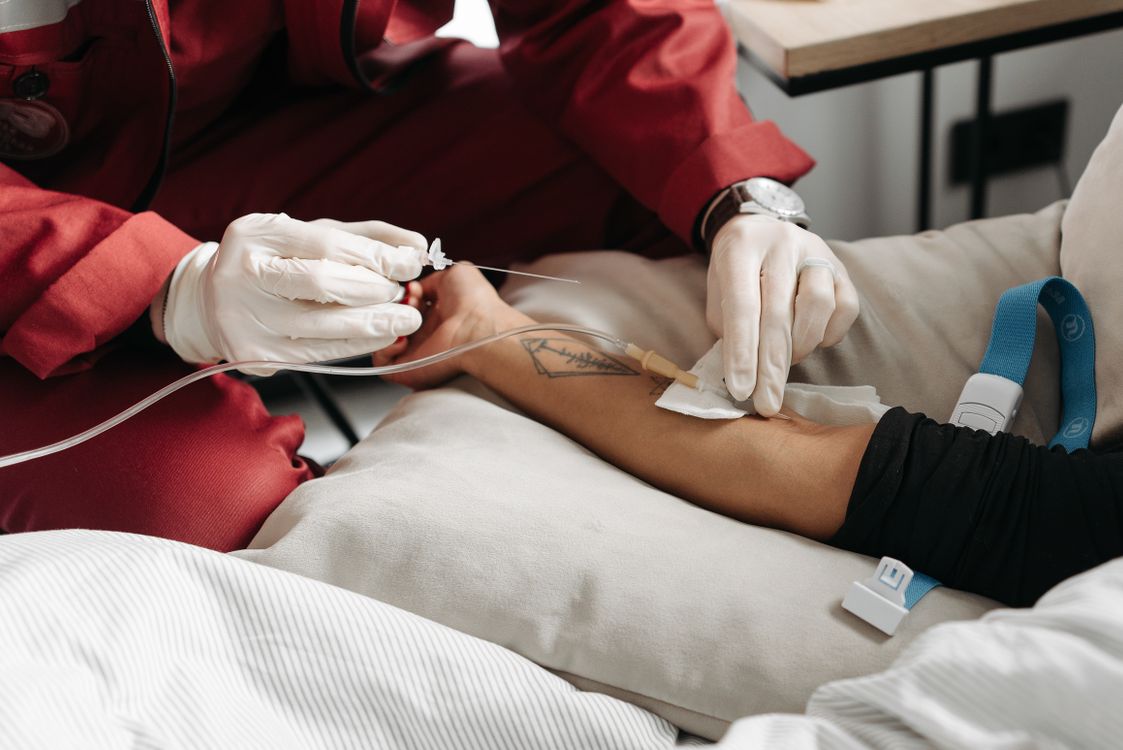
If drinking water is the best way to stay hydrated, why do so many travelers choose IV hydration after a long flight? The answer is simple: recovery.
IV hydration delivers sterile fluids and electrolytes, vitamins, and other nutrients directly into your bloodstream, bypassing the digestive system. This allows your body to begin replenishing lost fluids immediately, making IV therapy one of the fastest and most direct ways to restore hydration after travel.
Drinking water should always be your foundation for staying hydrated, and we encourage every traveler to hydrate well before, during, and after their flight. But if you've already arrived feeling depleted, fatigued, or behind on fluids, IV hydration can help restore what your body has lost faster than oral hydration can. It's the same route hospitals rely on when rapid, controlled hydration is needed.
At Liquid Lounge, a typical hydration session takes just 45 to 60 minutes and is performed in the comfort of your hotel, villa, or vacation rental. There's no need to find a clinic, sit in traffic, or spend precious vacation time in a waiting room. Instead, you can relax while your body begins recovering from the journey.
IV hydration delivers fluids with 100% bioavailability directly to the bloodstream. Oral rehydration begins absorption only after 30 or more minutes through the GI tract, and reduced gut motility during flight further slows that process (PMC/NIH).
explore IV options for travel recovery
What Should You Expect from an Arrival-Day IV Session?
After a long day of airports, security lines, and travel, the last thing you want is another errand. That's why we come to you.
Whether you're staying at a resort, private villa, or vacation rental, your arrival-day IV session is designed to be convenient, personalized, and focused on helping you recover from the journey.
Before Your Session
We'll begin with a brief medical assessment, discussing your flight, symptoms, hydration status, wellness goals, and relevant medical history. Every treatment is tailored to your needs because no two travelers arrive feeling exactly the same.
During Your Session
Your IV begins with fluids and electrolytes to restore hydration. Depending on your goals, you can also add vitamins, minerals, antioxidants, or advanced wellness therapies such as NAD⁺ or glutathione to further support recovery and overall well-being.
Most sessions take 45 to 60 minutes, giving you time to relax, decompress, and let your body begin recovering.
After Your Session
Some guests begin noticing the benefits during the session, while many feel more refreshed and alert within 30 to 60 minutes of completing their IV. Individual responses vary, but the goal is always the same: to help you recover from the journey as quickly and comfortably as possible.
We won't promise to eliminate jet lag, but we can help support your body's ability to adjust to a new time zone. What we can do is quickly restore hydration and replenish supportive nutrients, so you're not recovering from dehydration and jet lag at the same time.
Frequently Asked Questions
Can IV therapy cure jet lag?
No, and any provider who tells you otherwise is overstating what IV therapy can do.
Jet lag is caused by a disruption to your body's internal clock, and it takes time to adjust to a new time zone. IV therapy can't reset your circadian rhythm. What it can do is quickly restore hydration and replenish supportive nutrients, helping reduce the dehydration and fatigue that often make jet lag feel even worse.
How soon after landing should I book an IV session?
Many guests schedule their IV within a few hours of checking into their hotel or villa. We recommend booking before you arrive in Los Cabos to secure a time that fits seamlessly into your itinerary, especially during peak travel periods or for groups.
I drank water on the plane. Do I still need IV hydration?
Many travelers do. Drinking water during your flight is one of the best things you can do, but for many people, it isn't enough to fully replace the fluids and electrolytes lost during hours in a low-humidity aircraft cabin. If you arrive feeling thirsty, fatigued, mentally foggy, or with a headache, IV hydration provides one of the fastest and most direct ways to restore hydration and support your recovery.
What's in the IV drip?
Every treatment starts with Isotonic IV fluids and electrolytes to restore hydration. From there, your treatment can be personalized with vitamins, minerals, antioxidants, and advanced wellness therapies such as NAD⁺ or glutathione based on your symptoms, travel history, and wellness goals. Because every traveler is different, every IV should be too.
Is it safe to get an IV drip at my hotel?
Yes. Every Liquid Lounge IV therapy session is administered by a licensed healthcare professional with advanced training in IV therapy and patient care. Before every treatment, we perform a brief medical assessment to ensure your therapy is safe, appropriate, and tailored to your individual needs.
We use sterile technique, medical-grade equipment, and evidence-informed protocols throughout every session. Whether you're staying at a hotel, private villa, or vacation rental, you can expect the same level of professionalism, safety, and clinical care you would expect in a healthcare setting. All treatments are delivered in the comfort and convenience of your accommodation.
Please note: While most resorts, hotels, and vacation rentals welcome mobile wellness services, some properties have their own guest access or vendor policies. We recommend checking with your accommodation in advance if you have any questions, and we're always happy to coordinate with your property when needed.
Do I need to book in advance?
We recommend booking your arrival-day IV before you travel, especially during holidays, long weekends, and peak travel seasons. Pre-booking allows you to reserve your preferred appointment time and helps ensure availability, so your recovery plan is already in place before you even land in Cabo.
While we always do our best to accommodate same-day requests, advance booking gives you the greatest flexibility and helps ensure your treatment fits seamlessly into your arrival plans.
You Didn't Come to Cabo to Sleep It Off

You planned this trip because you wanted to be somewhere beautiful with the people who matter most. You imagined afternoons by the pool, fresh ceviche, sunset cruises, championship golf, world-class fishing, and that first cold drink with your feet in the sand. That's still waiting for you.
The journey simply created a physical hurdle between you and the vacation you've been looking forward to.
IV therapy won't reset your body clock overnight, and it shouldn't be expected to. What it can do is quickly restore hydration, replenish supportive nutrients, and help your body recover from the physical demands of travel so you can start feeling more like yourself, sooner.
At Liquid Lounge, our goal isn't just hydration. It's recovery. It's helping your vacation start when you land, not the day after.
If you're planning a trip to Los Cabos, we recommend booking your arrival-day IV before you travel, especially during peak seasons, holidays, and long weekends. We'll come directly to your hotel, villa, or vacation rental, so you can relax while your recovery begins.
Because every hour you spend recovering from the journey is an hour you could have spent enjoying why you came to Cabo in the first place.
Nathan Brown, BSN, RN, is the founder of Liquid Lounge in Los Cabos, Mexico. With more than 10 years of clinical experience, he provides evidence-informed, personalized medical care in collaboration with trusted medical professionals, helping visitors and residents recover faster, feel their best, and enjoy more of Los Cabos.